
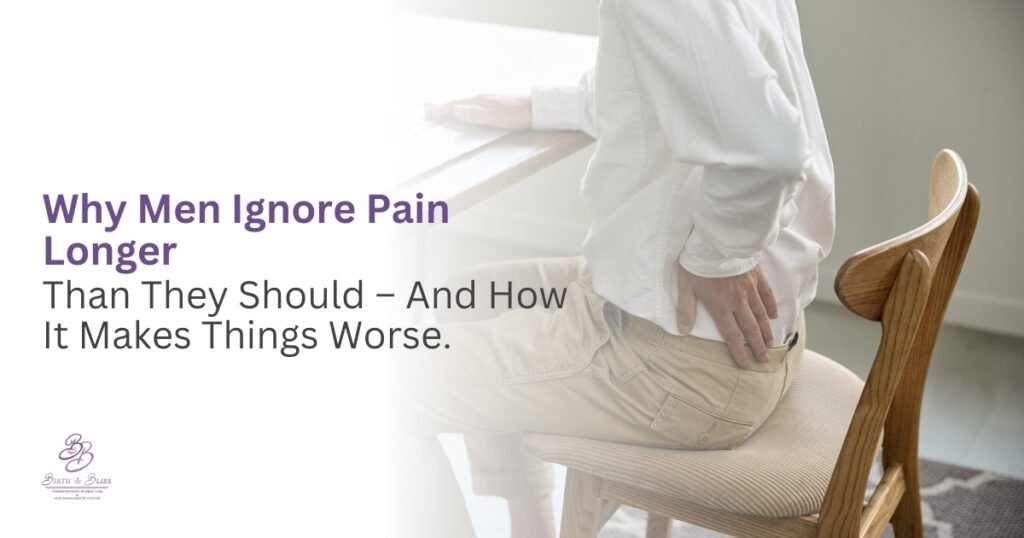
This single thought is one of the biggest reasons many men suffer longer, recover slower, and face more serious health issues than necessary.
Across ages and lifestyles, men tend to ignore pain, delay medical care, and push through discomfort—often until the problem becomes impossible to ignore. Let’s break down why this happens and how delaying care actually makes things worse.
Why Do Men Ignore Pain?
1. “Tough It Out” Mentality
From a young age, men are often taught that pain is a sign of weakness. Enduring discomfort becomes a badge of strength, even when it’s harmful.
Pain is not weakness—it’s your body asking for attention.
2. Fear of Diagnosis
Many men avoid doctors because they fear:
Bad news
Surgery
Long-term treatment
Lifestyle changes
Unfortunately, avoiding diagnosis doesn’t prevent problems—it allows them to grow silently.
3. Busy Schedules & Priorities
Work, responsibilities, and family often come first. Health gets postponed until “later,” which sometimes never comes—until the pain becomes severe.
4. Belief That Pain Is “Normal”
Back pain, joint pain, stomach issues, or urinary discomfort are often dismissed as:
“Age-related”
“Work-related”
“Temporary”
But chronic pain is never normal, no matter your age.
How Ignoring Pain Makes Things Worse
1. Small Problems Turn Into Big Ones
What starts as mild discomfort can progress into:
Chronic pain
Nerve damage
Reduced mobility
Complicated treatments
Early intervention is usually simpler, faster, and more effective.
2. Recovery Takes Longer
The longer pain is ignored, the harder it becomes to treat. Delayed care often means:
Longer recovery time
More aggressive treatment
Higher costs
3. Impact on Mental Health
Living with untreated pain can lead to:
Irritability
Poor sleep
Anxiety or low mood
Reduced quality of life
Pain doesn’t just affect the body—it affects the mind.
4. Daily Life Suffers
Untreated pain can interfere with:
Work performance
Physical activity
Relationships
Sexual health
Many men don’t realize how much pain is limiting them until it’s addressed.
Common Types of Pain Men Ignore Most
Back and neck pain
Knee and joint pain
Urinary discomfort
Abdominal or digestive pain
Headaches
Numbness or tingling
These symptoms often signal underlying issues that won’t resolve on their own.
When Should Men Stop Waiting?
You should seek medical advice if pain:
Lasts more than a few days
Keeps coming back
Gets worse over time
Affects sleep or daily activities
Is accompanied by weakness, numbness, or fever
Listening early saves you from bigger problems later.
Redefining Strength: Taking Action Early
Real strength isn’t ignoring pain—it’s addressing it before it controls your life.
Getting timely medical care can:
Prevent complications
Restore mobility and comfort
Improve long-term health
Help you return to normal life faster
Final Thoughts
Pain is not something to “push through” endlessly. It’s a warning sign—and ignoring it often leads to bigger, harder-to-treat problems.
If you’ve been waiting for pain to disappear on its own, this is your reminder:
Your health deserves attention now—not later.