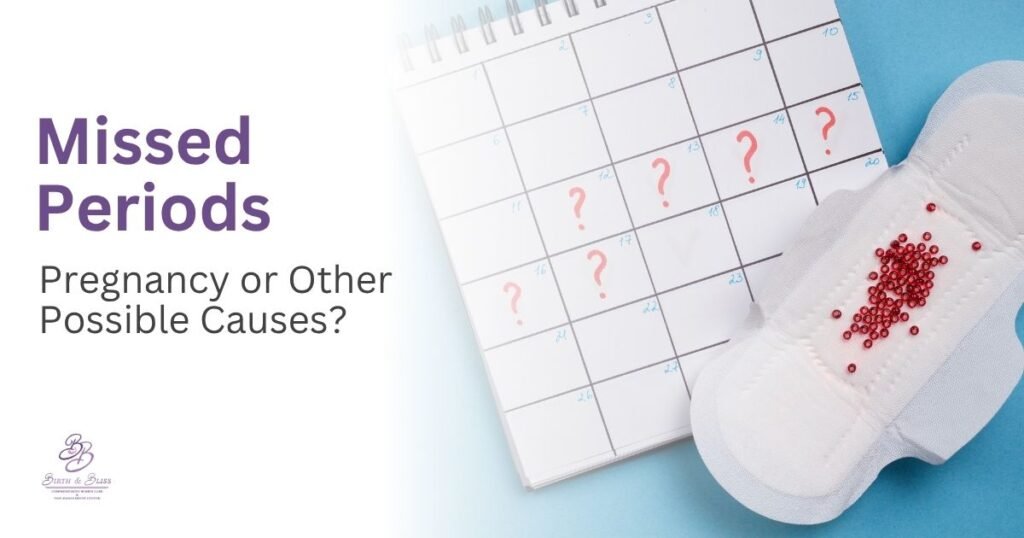
A missed period can immediately make you wonder, “Could I be pregnant?” Pregnancy is certainly one of the most common reasons for a missed period in someone who is sexually active. However, it is not the only possible explanation.
Changes in hormones, stress, weight, exercise, medications, thyroid problems, polycystic ovary syndrome (PCOS), and other health conditions can also affect the menstrual cycle.
Understanding why your period is late or absent can help you know when to take a pregnancy test and when it is important to consult a gynecologist.
What Is Considered a Missed Period?
A menstrual cycle does not necessarily occur on exactly the same day every month. Cycle length can naturally vary from person to person and sometimes from one month to another.
A period may be considered missed when it does not occur around the expected time, particularly when your cycles are usually predictable.
If your periods are frequently irregular or you go several months without menstruation, it is worth discussing the pattern with a healthcare professional.
Could a Missed Period Mean Pregnancy?
Yes. Pregnancy is an important cause of a missed period, particularly if you have had unprotected sex or there has been a possibility of contraceptive failure.
After conception, hormonal changes support the pregnancy and prevent the normal menstrual cycle from continuing, so the expected period does not occur.
A missed period may be accompanied by other early pregnancy symptoms, including:
- Nausea or vomiting
- Breast tenderness
- Increased tiredness
- Increased urination
- Mild abdominal cramping
- Changes in appetite
- Increased sensitivity to certain smells
However, not everyone experiences noticeable symptoms during early pregnancy.
When Should You Take a Pregnancy Test?
If pregnancy is possible and your period is late, a home urine pregnancy test can be a useful first step.
Pregnancy tests detect human chorionic gonadotropin (hCG), a hormone produced during pregnancy. Testing too early can sometimes result in a negative test even when pregnancy is present.
If the test is negative but your period still does not arrive, repeating the test after an appropriate interval or consulting your healthcare provider may be recommended.
Other Common Causes of Missed Periods
If pregnancy has been ruled out, there are several other possible causes.
1. Stress
Significant emotional or physical stress can affect the hormones that regulate ovulation.
Major life changes, work pressure, relationship difficulties, poor sleep, or prolonged stress may contribute to a delayed or missed period.
For some women, the cycle returns to its usual pattern once the underlying stress is reduced.
2. Polycystic Ovary Syndrome (PCOS)
PCOS is a common hormonal condition that can cause irregular or infrequent periods.
Women with PCOS may also experience:
- Acne
- Excess facial or body hair
- Weight changes
- Difficulty with ovulation
- Hair thinning
Not every woman with PCOS experiences all of these symptoms.
If periods are consistently irregular, a gynecological evaluation can help determine whether PCOS or another hormonal condition may be involved.
3. Sudden Weight Changes
Significant weight loss or weight gain can influence reproductive hormones.
Very low calorie intake, restrictive dieting, eating disorders, or substantial changes in body weight may interfere with ovulation and cause periods to become irregular or stop temporarily.
4. Excessive Exercise
Regular physical activity is beneficial for overall health. However, very intense exercise combined with inadequate calorie intake can sometimes affect ovulation and menstrual cycles.
This can occur in athletes or individuals undergoing demanding training programs.
5. Thyroid Disorders
The thyroid gland plays an important role in regulating metabolism and interacts with reproductive hormones.
Both an underactive thyroid (hypothyroidism) and an overactive thyroid (hyperthyroidism) can sometimes cause changes in menstrual patterns.
Other symptoms, such as unexplained weight changes, fatigue, changes in heart rate, or temperature sensitivity, may provide additional clues.
6. Perimenopause
As women approach menopause, hormonal fluctuations can cause menstrual cycles to become less predictable.
Periods may become:
- Longer or shorter
- Heavier or lighter
- More or less frequent
Perimenopause commonly occurs in midlife, although the timing varies between individuals.
7. Breastfeeding
Breastfeeding can suppress ovulation and cause periods to become irregular or temporarily absent.
However, ovulation can occur before the first postpartum period, so breastfeeding should not automatically be assumed to prevent pregnancy.
8. Certain Medications
Some medications can affect the menstrual cycle.
Hormonal contraceptives can also change bleeding patterns, and some women may experience very light or absent periods while using certain contraceptive methods.
If your menstrual pattern changes after starting or stopping a medication, discuss it with your doctor rather than stopping prescribed treatment on your own.
9. Other Hormonal or Medical Conditions
Problems involving the ovaries, pituitary gland, adrenal glands, or reproductive system can sometimes affect menstruation.
This is why persistent or unexplained changes in the menstrual cycle deserve proper evaluation.
What Should You Do After a Missed Period?
If your period is late, consider the following steps:
Step 1: Consider Pregnancy
If there is a possibility of pregnancy, take a home pregnancy test according to the manufacturer’s instructions.
Step 2: Track Your Cycle
Keep a record of:
- The first day of your last period
- Your usual cycle length
- Any unusual bleeding
- Symptoms such as pain or nausea
- Major changes in weight, stress, exercise, or medication
This information can be helpful during a medical consultation.
Step 3: Repeat Testing If Necessary
A negative pregnancy test does not always completely rule out pregnancy if testing is done very early.
If your period remains absent, discuss whether repeat testing or further evaluation is appropriate.
Step 4: Consult a Gynecologist if the Problem Persists
A gynecologist can evaluate your symptoms, menstrual history, medications, and overall health and may recommend appropriate tests to identify the underlying cause.
What Tests May Be Needed?
The investigations depend on your symptoms and medical history.
Depending on the situation, your doctor may recommend:
- Pregnancy testing
- Thyroid function testing
- Other hormone tests
- Blood tests
- Pelvic ultrasound
- Evaluation for PCOS
- Other investigations based on clinical findings
Not everyone with a missed period needs every test.
When Should You See a Gynecologist?
A single late period is not necessarily a reason for concern, particularly if your cycles are sometimes irregular.
However, medical evaluation is advisable if:
- Your periods repeatedly become irregular
- You miss periods for several months
- You frequently have very long or very short cycles
- You have symptoms suggesting a hormonal disorder
- You have unexplained weight changes
- You have excessive facial or body hair or persistent acne
- You are trying to conceive and your periods are irregular
- You have concerns about pregnancy
When Is a Missed Period an Emergency?
A missed period accompanied by severe lower abdominal or pelvic pain, heavy bleeding, dizziness, fainting, or shoulder-tip pain, particularly when pregnancy is possible, requires urgent medical assessment.
These symptoms can sometimes occur with an ectopic pregnancy or other conditions that need prompt treatment.
Frequently Asked Questions
Can stress cause a missed period?
Yes. Significant stress can interfere with the hormonal signals involved in ovulation and may result in a delayed or missed period.
How many days late can a period be?
There is no single number that applies to everyone because normal cycle lengths vary. If your period is significantly later than usual and pregnancy is possible, consider taking a pregnancy test.
Can PCOS cause missed periods?
Yes. Irregular or infrequent periods are common in women with PCOS because ovulation may not occur regularly.
Can you be pregnant without pregnancy symptoms?
Yes. Some women have few or no noticeable symptoms during early pregnancy. A pregnancy test is more reliable than symptoms alone for determining whether pregnancy may be present.
Can a missed period happen without pregnancy?
Yes. Stress, hormonal changes, PCOS, thyroid disorders, weight changes, intense exercise, breastfeeding, perimenopause, medications, and other factors can cause missed or delayed periods.
Should I worry if I miss one period?
Not necessarily. An occasional delayed period can happen for many reasons. However, repeated or prolonged absence of periods should be evaluated by a healthcare professional.
Conclusion
A missed period does not always mean pregnancy, although pregnancy should be considered whenever there is a possibility of conception. Other factors—including stress, PCOS, thyroid problems, weight changes, excessive exercise, breastfeeding, medications, and perimenopause—can also affect the menstrual cycle.
If your period is repeatedly irregular, absent for an extended period, or accompanied by unusual symptoms, identifying the underlying cause is important rather than simply waiting for the cycle to return.
If you are concerned about missed or irregular periods, Dr. Gazal Garg can help evaluate your symptoms, determine the possible cause, and guide you toward appropriate treatment and care.