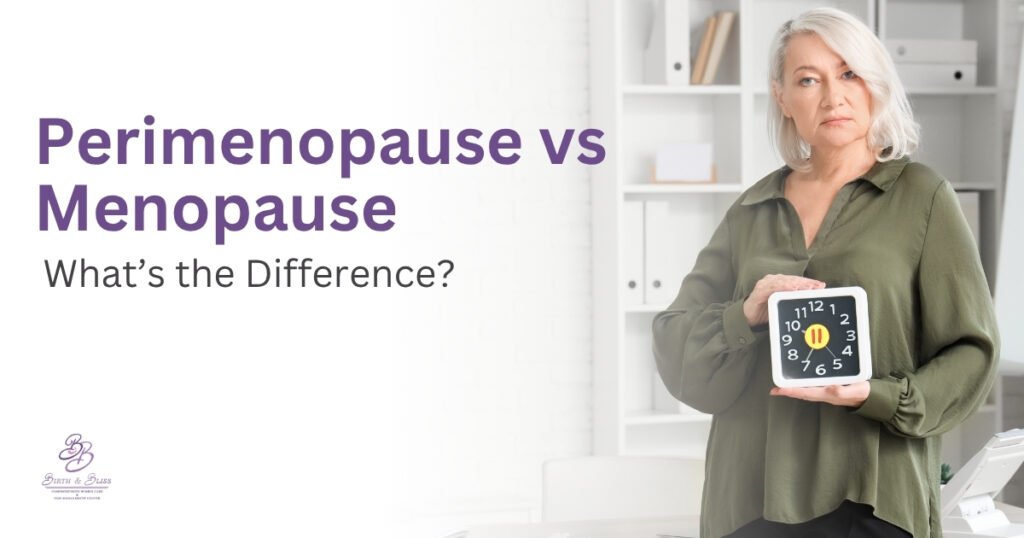
Menopause is a natural stage of every woman’s reproductive life, but the years leading up to it can bring many physical and emotional changes. One of the most common questions women have is: “What is the difference between perimenopause and menopause?”
Although the terms are often used interchangeably, perimenopause and menopause are not the same thing. Perimenopause is the transition period leading up to menopause, while menopause marks the point when menstrual periods have permanently stopped.
Understanding these changes can help women recognise what is happening in their bodies and know when to seek medical advice.
What Is Perimenopause?
Perimenopause means “around menopause.” It is the transitional phase during which the ovaries gradually produce less estrogen and reproductive hormones begin to fluctuate.
Perimenopause can start several years before menopause. For many women, it begins during their 40s, although the timing can vary.
During this phase, menstrual cycles may become shorter, longer, heavier, lighter, or unpredictable. Some months may involve ovulation, while others may not.
Common symptoms of perimenopause include:
- Irregular periods
- Hot flashes
- Night sweats
- Mood changes
- Irritability or anxiety
- Difficulty sleeping
- Fatigue
- Vaginal dryness
- Reduced sexual desire
- Breast tenderness
- Headaches
- Difficulty concentrating or “brain fog”
Symptoms can vary considerably from one woman to another. Some women experience only mild changes, while others may have symptoms that significantly affect their daily lives.
What Is Menopause?
Menopause is officially reached when a woman has not had a menstrual period for 12 consecutive months, provided there is no other medical explanation for the absence of periods.
The average age of natural menopause is around 51 years, although it can occur earlier or later.
After menopause, the ovaries produce much less estrogen and progesterone, and natural ovulation and menstruation stop.
Menopause itself is not a disease. It is a normal biological transition. However, the hormonal changes associated with menopause can cause symptoms that may require medical support.
Perimenopause vs Menopause: Key Differences
| Feature | Perimenopause | Menopause |
|---|---|---|
| Meaning | Transition leading up to menopause | Point marking the end of menstrual periods |
| Periods | Irregular or changing | No periods for 12 consecutive months |
| Ovulation | May still occur, but becomes irregular | Natural ovulation stops |
| Fertility | Declining but pregnancy is still possible | Natural pregnancy is no longer expected |
| Hormones | Estrogen and progesterone fluctuate | Estrogen and progesterone remain at lower levels |
| Symptoms | Can begin and fluctuate | Symptoms may continue after periods stop |
Can You Get Pregnant During Perimenopause?
Yes.
This is an important distinction. During perimenopause, ovulation can still occur even when periods are irregular. Therefore, pregnancy is still possible until menopause has been reached.
Women who do not wish to become pregnant should continue using appropriate contraception during perimenopause and discuss their options with their healthcare provider.
Once menopause has been confirmed after 12 months without a period, natural pregnancy is no longer expected.
What Happens to Hormones During Perimenopause?
During the reproductive years, estrogen and progesterone follow relatively predictable patterns throughout the menstrual cycle.
As perimenopause progresses, ovarian hormone production becomes less predictable. Estrogen levels can rise and fall significantly, while ovulation becomes less frequent.
These hormonal fluctuations are responsible for many of the symptoms women experience during the menopausal transition.
It is also important to understand that hormone levels can change from day to day. Therefore, a single hormone blood test does not always provide a complete picture of whether a woman is in perimenopause.
Doctors generally consider a woman’s age, symptoms, menstrual history, and overall health when assessing menopausal transition.
What Are the Symptoms of Menopause?
Many symptoms associated with perimenopause can continue into menopause and beyond.
Common symptoms include:
Hot Flashes and Night Sweats
A sudden feeling of warmth, sweating, flushing, and sometimes chills can occur due to changes in the body’s temperature regulation.
Sleep Problems
Hormonal changes, night sweats, stress, or changes in sleep patterns can make it difficult to fall asleep or stay asleep.
Mood Changes
Some women experience irritability, mood swings, anxiety, or low mood during the menopausal transition.
Vaginal Dryness
Lower estrogen levels can cause vaginal tissues to become thinner and drier. This may result in discomfort during intercourse or vaginal irritation.
Changes in Sexual Health
Changes in hormones, sleep, mood, vaginal dryness, and overall wellbeing can affect sexual desire and comfort.
Changes in Bone and Heart Health
Estrogen levels decline significantly after menopause. Over time, this can contribute to changes in bone health and cardiovascular risk, making healthy lifestyle habits and appropriate medical check-ups particularly important.
How Long Does Perimenopause Last?
There is no fixed duration for perimenopause.
The transition can last for several years, and symptoms may change over time. Eventually, menstrual periods become less frequent and stop completely, marking menopause.
If periods stop for a prolonged period but then return, especially if bleeding is heavy or unusual, it is important to consult a gynaecologist rather than assuming it is simply menopause.
When Should You See a Gynaecologist?
Menopause is a natural process, but you do not have to simply tolerate symptoms that affect your quality of life.
Speak with a gynaecologist if you experience:
- Very heavy menstrual bleeding
- Bleeding between periods
- Bleeding after sexual intercourse
- Severe pelvic pain
- Persistent sleep problems
- Significant mood changes
- Severe or frequent hot flashes
- Vaginal dryness or painful intercourse
- Any bleeding after menopause
Any vaginal bleeding after menopause should be evaluated by a healthcare professional.
A gynaecologist can assess your symptoms, rule out other causes, and discuss suitable treatment or lifestyle approaches.
How Can You Manage Perimenopause and Menopause Symptoms?
Healthy lifestyle habits can support overall wellbeing during this transition.
Maintain a Balanced Diet
Include vegetables, fruits, whole grains, protein-rich foods, and calcium-rich foods. Adequate vitamin D and calcium are particularly important for bone health.
Exercise Regularly
A combination of aerobic exercise, strength training, and weight-bearing activities can support cardiovascular fitness, muscle strength, and bone health.
Prioritise Sleep
Maintain a consistent sleep schedule and create a comfortable, cool sleeping environment, particularly if night sweats are a problem.
Manage Stress
Relaxation techniques, yoga, meditation, breathing exercises, and regular physical activity may help support emotional wellbeing.
Avoid Smoking and Limit Alcohol
Avoiding tobacco and limiting alcohol can support long-term health during and after menopause.
Discuss Treatment Options
Depending on your symptoms and medical history, your doctor may discuss options such as hormone therapy or non-hormonal treatments. Treatment should always be individualised after discussing potential benefits and risks.
Frequently Asked Questions
Is perimenopause the same as menopause?
No. Perimenopause is the transition leading up to menopause. Menopause is confirmed after 12 consecutive months without a menstrual period.
What age does perimenopause start?
Perimenopause commonly begins during the 40s, but it can begin earlier or later. Every woman’s experience is different.
Can periods suddenly stop during perimenopause?
Periods can become very irregular and may sometimes be absent for several months before returning. Menopause is confirmed only after 12 consecutive months without menstruation.
Can you still get pregnant during perimenopause?
Yes. Ovulation can still occur during perimenopause, so pregnancy remains possible until menopause is reached.
Do menopause symptoms go away?
Symptoms vary from woman to woman. Some improve with time, while others may continue for several years. Effective treatments are available for many troublesome symptoms.
Final Thoughts
Perimenopause and menopause are connected, but they are different stages. Perimenopause is the hormonal transition before menopause, while menopause is confirmed after 12 months without a menstrual period.
Understanding the difference can help women recognise changes early and seek appropriate care when symptoms become difficult to manage.
If you are experiencing irregular periods, hot flashes, mood changes, sleep problems, vaginal dryness, or other symptoms associated with perimenopause or menopause, Birth and Bliss can help you understand your symptoms and explore appropriate women’s health care options.