Polycystic Ovary Syndrome (PCOS) is one of the most common hormonal conditions affecting women of reproductive age. Along with irregular periods, acne, excess hair growth, and weight-related changes, PCOS can also affect a woman’s ability to conceive.
But does having PCOS mean you cannot get pregnant? Absolutely not. PCOS can make conception more challenging for some women, mainly because it can interfere with regular ovulation. With the right diagnosis, lifestyle changes, and medical treatment when needed, many women with PCOS are able to conceive and have healthy pregnancies.
At Birth and Bliss, we believe understanding PCOS and fertility can help women make informed decisions about their reproductive health.
What Is PCOS?
Polycystic Ovary Syndrome is a hormonal and metabolic condition that can affect menstrual cycles, ovulation, and other aspects of health. Women with PCOS may have irregular or infrequent periods, higher levels of androgens (male-type hormones), acne, excess facial or body hair, or difficulty with weight management.
Not every woman with PCOS experiences the same symptoms, and having PCOS does not necessarily mean that a woman has ovarian cysts.
How Can PCOS Affect Fertility?
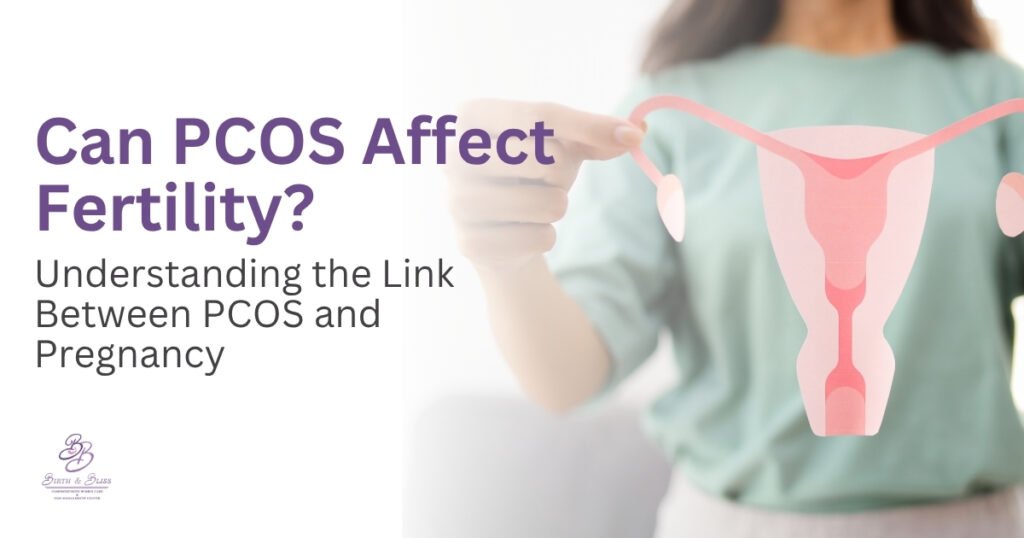
The main way PCOS can affect fertility is by interfering with ovulation.
Ovulation is the process in which an ovary releases a mature egg. For pregnancy to occur naturally, an egg generally needs to be released and become available for fertilisation.
In PCOS, hormonal changes and elevated androgen levels can prevent or delay ovulation. Some women may ovulate irregularly, while others may not ovulate in certain menstrual cycles. This can make it more difficult to predict the fertile window and may reduce the chances of conception.
Common fertility-related effects of PCOS include:
- Irregular or absent periods
- Irregular ovulation
- Difficulty identifying fertile days
- Longer menstrual cycles
- Increased time needed to conceive
Importantly, PCOS does not automatically mean infertility. It is a treatable condition, and fertility can often be improved by addressing the underlying causes of irregular ovulation.
Does PCOS Mean You Cannot Get Pregnant?
No.
This is one of the most important things women with PCOS should know. PCOS may make it harder to conceive, but it does not mean pregnancy is impossible.
Some women with PCOS become pregnant naturally, while others may need help regulating ovulation. Depending on the individual situation, treatment may include lifestyle changes, medicines to stimulate ovulation, or fertility treatments such as IUI or IVF.
The appropriate approach depends on factors such as age, menstrual pattern, ovulation, weight, overall health, ovarian function, fallopian tube health, and the partner’s fertility.
Can Lifestyle Changes Improve Fertility With PCOS?
Lifestyle management can be an important part of PCOS care, particularly when weight, insulin resistance, or metabolic health are contributing to hormonal imbalance.
A balanced diet, regular physical activity, adequate sleep, stress management, and maintaining a healthy weight can support overall reproductive and metabolic health. For women who are overweight, even modest weight loss may help improve menstrual regularity and ovulation in some cases.
However, PCOS is different for every woman. Lifestyle changes should be personalised rather than based on restrictive diets or unrealistic weight-loss goals.
How Is PCOS-Related Infertility Treated?
Treatment depends on why pregnancy is not occurring and whether ovulation is the main issue.
1. Lifestyle and metabolic management
For some women, improving nutrition, physical activity, sleep, and metabolic health may help regulate menstrual cycles and support ovulation.
2. Ovulation-inducing medicines
When irregular or absent ovulation is preventing pregnancy, a doctor may recommend medicines that stimulate ovulation. Treatment is generally monitored by a healthcare professional to assess the response and reduce potential risks.
3. Intrauterine insemination (IUI)
IUI involves placing prepared sperm directly into the uterus around the time of ovulation. It may be considered in selected fertility situations, sometimes alongside ovulation stimulation.
4. In-vitro fertilisation (IVF)
If other approaches are unsuccessful or if there are additional fertility factors, IVF may be considered. IVF involves fertilising an egg with sperm in a laboratory and transferring the resulting embryo into the uterus.
A fertility specialist can help determine which option is appropriate rather than moving directly to advanced fertility treatment.
When Should You See a Fertility Specialist?
Women with PCOS who are planning pregnancy may benefit from discussing their reproductive health with an obstetrician-gynaecologist, particularly if periods are very irregular or absent.
For people without a known fertility problem, an infertility evaluation is generally recommended after 12 months of regular unprotected intercourse if the woman is under 35. For women older than 35, evaluation is generally recommended after 6 months of trying. Earlier assessment may be appropriate when there are known ovulation problems or other fertility concerns.
If you have PCOS and are planning a pregnancy, there is no need to wait unnecessarily if your periods are highly irregular or you are concerned about ovulation.
Frequently Asked Questions About PCOS and Fertility
Can I get pregnant naturally with PCOS?
Yes. Many women with PCOS can become pregnant naturally. However, irregular ovulation may make conception more difficult or take longer.
Does PCOS cause permanent infertility?
No. PCOS does not automatically cause permanent infertility. It is one of the common causes of ovulation-related fertility problems, and several treatment options are available.
Does having regular periods mean I am ovulating?
Not necessarily. Menstrual bleeding does not always confirm that ovulation has occurred. If pregnancy is taking longer than expected, your doctor can assess whether ovulation is occurring.
Can PCOS be cured?
There is currently no single cure for PCOS, but its symptoms and associated fertility problems can often be managed effectively with appropriate medical care and lifestyle measures.
Should I lose weight before trying to get pregnant if I have PCOS?
Not every woman with PCOS needs to lose weight. If you are overweight, your doctor may recommend weight management because it can improve metabolic health and, in some women, support more regular ovulation. Your fertility plan should be personalised.
Takeaway
PCOS can affect fertility, mainly because it can cause irregular or absent ovulation. But a PCOS diagnosis does not mean that you cannot become a mother.
With early evaluation, healthy lifestyle habits, appropriate treatment, and fertility support when needed, many women with PCOS can successfully conceive.
If you have PCOS, irregular periods, difficulty conceiving, or concerns about your fertility, speaking with a qualified gynaecologist can help you understand your individual situation and choose the right next step.
Birth and Bliss is committed to providing compassionate, personalised women’s healthcare and fertility guidance at every stage of your journey.