
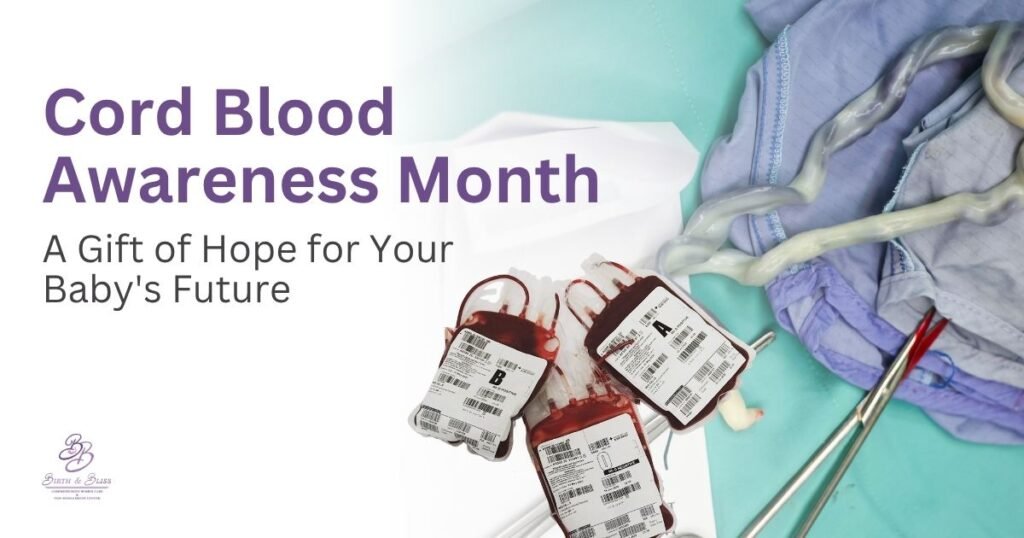
Every year, Cord Blood Awareness Month is observed to educate expecting parents about the importance of umbilical cord blood and the life-saving potential it holds. While many parents carefully prepare for their baby’s arrival by choosing a hospital, setting up a nursery, and packing a hospital bag, few are aware that the blood remaining in the umbilical cord after birth can become a valuable medical resource.
At Birth & Bliss, we believe informed parents make confident decisions. Understanding cord blood banking can help you explore an option that may benefit your child or even other family members in the future.
What is Cord Blood?
Cord blood is the blood that remains in the baby’s umbilical cord and placenta after delivery. It contains a rich concentration of hematopoietic stem cells, which have the remarkable ability to develop into different types of blood and immune system cells.
Unlike embryonic stem cells, cord blood stem cells are collected safely after birth without causing any harm to the mother or baby.
Why is Cord Blood Important?
Stem cells found in cord blood are currently used to treat more than 80 medical conditions, including:
- Leukemia
- Lymphoma
- Certain inherited blood disorders
- Bone marrow failure syndromes
- Immune system disorders
- Some metabolic diseases
Researchers are also studying the potential use of cord blood stem cells in regenerative medicine for conditions such as:
- Cerebral palsy
- Autism spectrum disorders
- Type 1 diabetes
- Stroke recovery
- Spinal cord injuries
While many of these treatments are still under clinical research, the future possibilities continue to expand.
What is Cord Blood Banking?
Cord blood banking is the process of collecting, testing, processing, and storing cord blood immediately after childbirth for potential future medical use.
There are two main types of cord blood banking:
1. Private Cord Blood Banking
The cord blood is stored exclusively for your family’s future use.
Suitable for:
- Families with a history of blood disorders
- Parents wanting biological insurance for future medical needs
2. Public Cord Blood Banking
The donated cord blood becomes available to anyone who may need a stem cell transplant and supports ongoing medical research.
How is Cord Blood Collected?
Many parents worry that cord blood collection might interfere with childbirth. Fortunately, the process is simple and completely painless.
The collection takes place only after:
- Your baby is safely delivered.
- The umbilical cord has been clamped and cut.
- Your healthcare provider collects the remaining blood from the cord into a sterile collection bag.
The procedure usually takes less than five minutes and does not affect the birthing process.
Benefits of Cord Blood Banking
Potential Future Treatment Option
Stored stem cells may be useful for treating certain blood-related diseases if needed later in life.
Readily Available
Unlike bone marrow donation, stored cord blood is immediately accessible when required.
Easier Matching Within Families
Cord blood may offer a better chance of compatibility among siblings and close family members.
Safe Collection
Collection is completely non-invasive and poses no risk to mother or baby.
Supports Medical Advancements
Donated cord blood contributes to ongoing research and the development of new therapies.
Is Cord Blood Banking Right for Every Family?
Cord blood banking is a personal decision. Factors to consider include:
- Family medical history
- Existing genetic disorders
- Cost of private banking
- Availability of public banking programs
- Future healthcare preferences
Discuss your options with your obstetrician or maternity care provider during pregnancy so you have enough time to make an informed decision.
Common Myths About Cord Blood Banking
Myth 1: Collection is painful.
Fact: The collection happens after delivery and causes no pain to either mother or baby.
Myth 2: Cord blood is only useful for the baby.
Fact: In some situations, stored cord blood may also help siblings or close family members.
Myth 3: It affects delayed cord clamping.
Fact: In many cases, delayed cord clamping can still be accommodated. Discuss your birth plan with your healthcare provider.
Myth 4: Cord blood is medical waste.
Fact: It contains valuable stem cells that have significant therapeutic potential.
Questions to Ask Before Choosing a Cord Blood Bank
Before selecting a cord blood bank, ask:
- Is the bank accredited?
- How are the stem cells processed and stored?
- What are the storage fees?
- How long can the samples remain viable?
- What quality testing is performed?
- What happens if the sample cannot be stored?
Choosing a reputable and accredited facility is essential.
Why Cord Blood Awareness Month Matters
Cord Blood Awareness Month encourages parents to learn about stem cell preservation before delivery. Since cord blood can only be collected at the time of birth, pregnancy is the ideal time to understand your options.
Greater awareness helps families:
- Make informed healthcare decisions
- Explore available banking options
- Understand the potential medical benefits
- Support life-saving stem cell therapies
Knowledge today can create opportunities for tomorrow.
Birth & Bliss: Supporting Informed Pregnancy Decisions
At Birth & Bliss, we believe every pregnancy journey deserves compassionate guidance and evidence-based information. Whether you’re planning your delivery, preparing for parenthood, or exploring cord blood banking, our team is here to answer your questions and help you make decisions that align with your family’s needs.
During your prenatal consultations, don’t hesitate to discuss cord blood preservation with your obstetrician so you can understand whether it’s the right choice for you.
Conclusion
Cord Blood Awareness Month serves as an important reminder that one simple decision made at birth could hold significant medical value in the future. While cord blood banking may not be necessary for every family, understanding its benefits empowers parents to make informed choices.
As research into stem cell therapies continues to evolve, preserving cord blood represents a promising opportunity that could support future medical treatments for your child or loved ones.
If you’re expecting a baby, talk to your healthcare provider early in your pregnancy about cord blood collection and banking options. Being informed today can help you make the best decision for your growing family.
Frequently Asked Questions (FAQs)
Is cord blood collection safe?
Yes. Cord blood is collected only after your baby’s birth and after the umbilical cord has been clamped and cut. The procedure is safe and painless.
Can cord blood be collected during a C-section?
Yes. Cord blood can usually be collected during both vaginal deliveries and cesarean sections.
Does delayed cord clamping prevent cord blood banking?
Not necessarily. In many cases, delayed cord clamping and cord blood collection can both be considered. Discuss your preferences with your healthcare provider.
How long can cord blood be stored?
Studies suggest that properly cryopreserved cord blood can remain viable for many years, with successful use reported after decades of storage.
Should every family choose private cord blood banking?
Not always. The decision depends on your family’s medical history, financial considerations, and personal preferences. Your obstetrician can help you evaluate the available options.