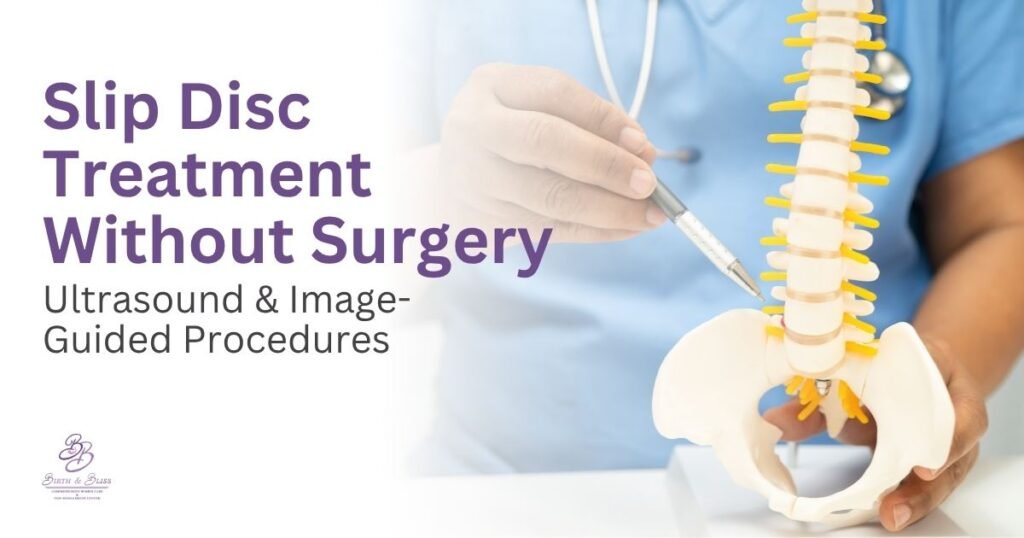
Back pain is one of the most common health problems today, and a slipped disc is a major reason behind severe neck or lower back pain. Many people fear that surgery is the only solution for slip disc problems, but modern medical advancements now offer effective non-surgical treatment options that can provide significant pain relief and improve mobility.
One of the most advanced and safe approaches includes ultrasound-guided and image-guided procedures. These minimally invasive treatments help target the exact source of pain without the need for major surgery.
What is a Slip Disc?
Herniated Disc, commonly known as a slip disc, occurs when the soft inner portion of a spinal disc pushes out through a crack in the outer layer. This can put pressure on nearby nerves and cause pain, numbness, or weakness.
Slip discs can occur in:
- Neck (Cervical spine)
- Mid back (Thoracic spine)
- Lower back (Lumbar spine)
The lower back is the most commonly affected area.
Common Symptoms of Slip Disc
Symptoms may vary depending on the severity and location of the disc problem.
Common signs include:
- Lower back pain
- Neck pain
- Pain radiating to legs or arms
- Numbness or tingling
- Muscle weakness
- Difficulty walking or sitting
- Sciatica pain
Pain may worsen while bending, coughing, lifting weight, or sitting for long periods.
Causes of Slip Disc
Several factors can increase the risk of developing a slipped disc, including:
- Aging and disc degeneration
- Poor posture
- Heavy lifting
- Sudden injury
- Obesity
- Long sitting hours
- Lack of exercise
Can Slip Disc Be Treated Without Surgery?
Yes, many slip disc patients recover successfully without surgery. Non-surgical treatment focuses on reducing inflammation, relieving nerve pressure, and improving movement.
Modern pain management techniques like ultrasound-guided and image-guided procedures are becoming increasingly popular because they are:
- Minimally invasive
- Safe and precise
- Faster recovery
- Less painful
- Often performed without hospitalization
What are Ultrasound & Image-Guided Procedures?
Ultrasound-guided and image-guided procedures use advanced imaging technology to help doctors accurately target the affected nerve, joint, or disc area.
These procedures may use:
- Ultrasound guidance
- Fluoroscopy (live X-ray imaging)
- C-arm imaging
The imaging helps doctors place medication exactly where inflammation or nerve compression exists.
This precision improves treatment effectiveness and reduces complications.
Common Non-Surgical Procedures for Slip Disc
1. Epidural Steroid Injection
This procedure helps reduce inflammation around compressed nerves and provides pain relief.
It is commonly used for:
- Sciatica
- Leg pain
- Severe nerve irritation
2. Nerve Root Block
A targeted injection is given near the affected nerve root to reduce pain and inflammation.
3. Facet Joint Injection
If back pain originates from spinal joints, facet joint injections may help relieve stiffness and discomfort.
4. Trigger Point Injections
These injections help relax painful muscle knots associated with chronic back pain.
5. Radiofrequency Ablation (RFA)
This advanced technique uses heat energy to block pain signals from specific nerves.
Benefits of Image-Guided Slip Disc Treatment
Accurate Treatment
Imaging guidance ensures medication reaches the exact painful area.
Reduced Need for Surgery
Many patients experience significant improvement without undergoing spinal surgery.
Faster Recovery
Most procedures are completed within a short time, allowing patients to return home the same day.
Minimal Risk
Since the procedures are minimally invasive, the risk of complications is lower compared to surgery.
Improved Mobility
Patients often experience better movement and reduced stiffness after treatment.
Who Can Benefit from These Procedures?
Non-surgical image-guided treatments may benefit patients who:
- Have persistent back or neck pain
- Experience sciatica
- Want to avoid surgery
- Did not get relief from medications or physiotherapy
- Are not fit for surgery
However, treatment suitability depends on the severity of the condition and proper medical evaluation.
Lifestyle Tips for Slip Disc Recovery
Along with medical treatment, lifestyle changes can improve recovery and help prevent future problems.
Helpful tips include:
- Maintain proper posture
- Avoid heavy lifting
- Exercise regularly
- Strengthen core muscles
- Maintain healthy body weight
- Avoid prolonged sitting
Physiotherapy and guided exercises are also important parts of recovery.
When Should You See a Doctor?
You should seek medical attention if you experience:
- Severe back pain
- Pain radiating to legs or arms
- Numbness or weakness
- Difficulty standing or walking
- Loss of bladder or bowel control
Early diagnosis and treatment can help prevent complications.
Final Thoughts
Slip disc pain can affect every aspect of daily life, but surgery is not always the only option. Advanced ultrasound and image-guided procedures now offer safe, precise, and effective non-surgical treatment for many patients suffering from chronic back pain and sciatica.
With timely diagnosis, expert care, and proper rehabilitation, many people can achieve long-term pain relief and return to normal activities without major surgery.